 English
 العربية

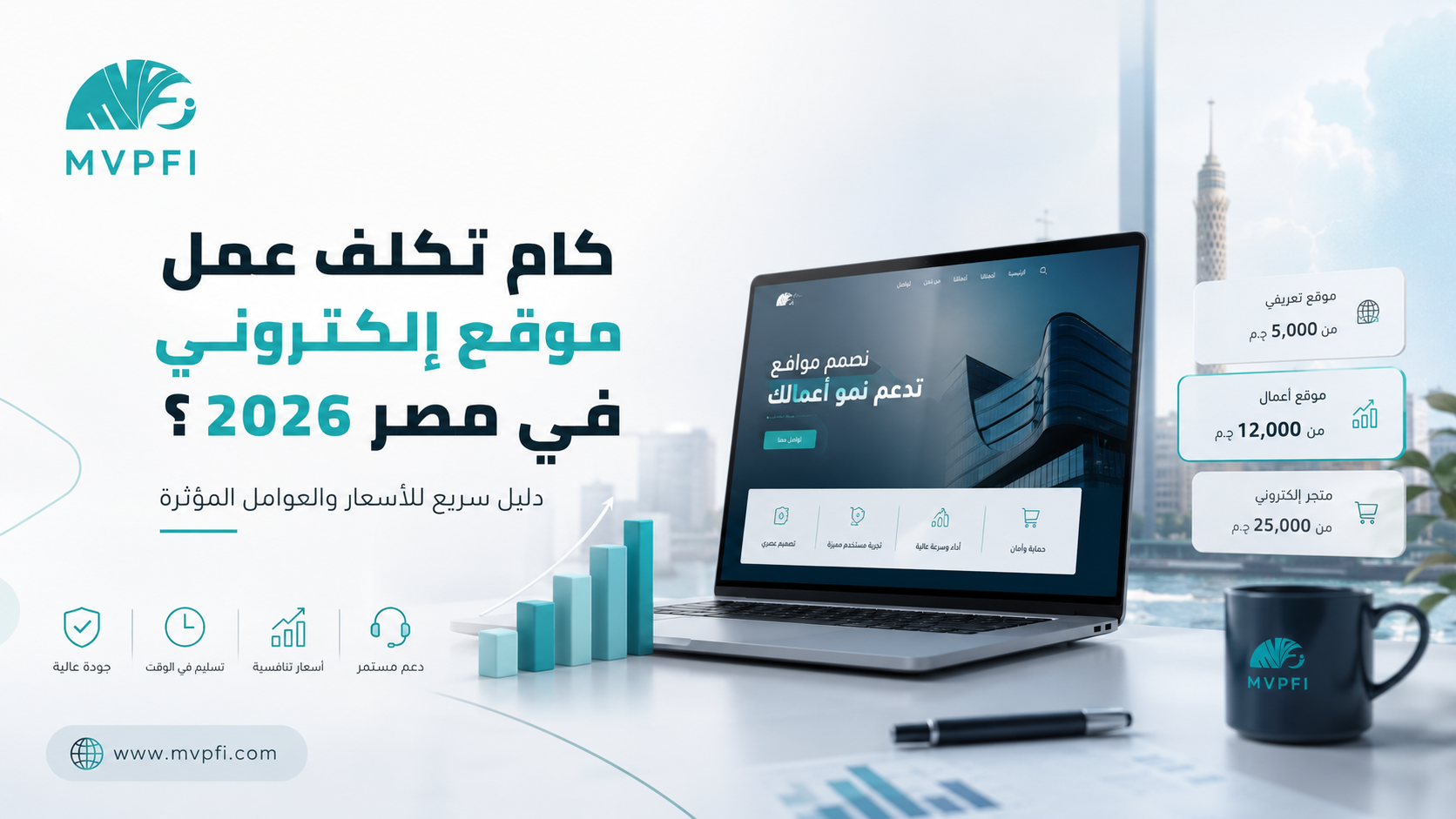
How Much Does It Cost to Build a Website in Egypt in 2026?
The question “How much does a website cost?” sounds simple, but it is actually similar to asking “How much does a car cost?” The answer depends on the type, features, design quality, content, admin panel, security, hosting, support, and user experience. In 2026, a website is no longer just an online brochure — it is a digital asset that affects trust, sales, advertising performance, and business growth.
Many business owners in Egypt ask about website cost expecting one fixed number. But the truth is that a website can start from a few thousand Egyptian pounds for a simple page, and can reach tens or even hundreds of thousands when it becomes an e-commerce store, custom platform, booking system, client portal, or multilingual business website.
This guide explains what goes into website pricing, why one offer may cost EGP 5,000 while another costs EGP 50,000 or more, and how to know whether your business needs a simple website, a professional company website, an online store, or a fully custom development project.
First: There Is No One Price for Every Website
A website is not one fixed product. A five-page company profile website is very different from an e-commerce store with online payment, shipping, product management, coupons, and customer accounts. A simple business website is also different from a learning platform, booking system, internal portal, or client dashboard.
That is why the best way to understand website cost is to look at the type and purpose of the website, not just ask for a general “website price.”
Website cost is not determined only by the number of pages — it is determined by what the website is expected to do for your business.
Estimated Website Prices in Egypt in 2026
The following ranges are general estimates to help you understand the market. The final cost depends on the project details, design quality, number of pages, development scope, integrations, content, support, hosting, and security requirements.
| Website Type | Estimated Cost Range | Best For |
|---|---|---|
| Landing Page | EGP 3,500 – 8,000 | Ad campaign, single service, product offer, or lead generation |
| Simple Informational Website | EGP 5,000 – 15,000 | Small business, clinic, office, consultant, or service provider |
| Professional Company Website | EGP 12,000 – 35,000 | Companies that need strong branding, service pages, and structured content |
| E-Commerce Website | EGP 25,000 – 90,000+ | Product sales, orders, payment, shipping, coupons, and customer accounts |
| Custom Website or Platform | EGP 50,000 – 200,000+ | Booking systems, portals, dashboards, subscriptions, CRM, or custom workflows |
Why Do Website Prices Differ So Much?
You may receive one offer for EGP 4,000 and another for EGP 40,000 for something both providers call a “website.” The difference is usually not in the word “website.” The real difference is in what is included behind that word.
Factor 1: Website Type and Business Goal
A website that only introduces your company will not cost the same as a website that receives orders, processes payments, manages stock, integrates with CRM, or supports customer accounts. The more the website is involved in daily operations, the more it becomes a business system rather than just a digital interface.
Informational Website
Presents your company, services, portfolio, contact details, and inquiry forms. It is a good starting point for many small businesses.
Professional Company Website
Includes structured service pages, industries served, blog, contact forms, stronger branding, and better user experience.
E-Commerce Website
Requires products, cart, checkout, orders, payment, shipping, coupons, customer accounts, and sales reports.
Custom Platform
Includes custom features such as bookings, subscriptions, client portals, user roles, integrations, dashboards, or internal workflows.
Factor 2: Design — Template or Custom?
A ready-made template can reduce cost and delivery time, but it often gives you a look that resembles many other websites and may limit customization. A custom design takes more time because it builds the experience around your brand, audience, services, and business goals.
If you only need a quick online presence, a template may be enough. But if your goal is to build trust, support advertising campaigns, improve brand perception, or compete in a serious market, custom design is usually the better investment.
Good design is not only about looking beautiful. It helps the visitor understand your service quickly, trust your business, and know what to do next.
Factor 3: Content Writing and Page Copy
Many website offers do not include content writing. A client orders a website, then later discovers that they still need text for the homepage, about page, services, FAQs, product descriptions, calls to action, and SEO sections.
Good content makes a major difference. A website without clear content becomes a nice-looking design that does not explain, sell, or convince.
Generic Copy
Repeated text that does not explain your difference, your value, or why the customer should choose you.
Targeted Content
Copy that explains the service, the problem it solves, why customers should trust you, and what action they should take.
SEO + Conversion
Content that supports search visibility and converts visitors into leads, inquiries, bookings, or sales.
Factor 4: Admin Panel and Content Management
A static website that you cannot easily update is often cheaper, but it may create problems later. Every small change requires contacting a developer. An admin panel makes it easier to add articles, edit pages, upload images, update service details, and manage website content.
Always ask: Will I be able to edit content myself? Can I add new pages? Are there user roles? Is the admin panel easy to use, or will I need a developer for every small change?
Factor 5: SEO Readiness
A website can look great but still be poorly prepared for Google. Basic SEO preparation includes page titles, meta descriptions, clean URLs, sitemap, schema, speed, mobile usability, and well-structured content.
If your website will depend only on paid ads, SEO may not feel urgent at first. But in the long term, a website that is not prepared for search engines loses valuable organic visibility.
Structured Pages
Every page should have a clear goal, useful title, and description that help both users and search engines.
Speed and Mobile Experience
Many visitors browse from mobile, so a slow or non-responsive website can lose potential customers.
Indexable Content
Text, images, links, and structure should help search engines understand what the website is about.
Blog or Articles
Articles help attract visitors who are searching for solutions related to your services.
Factor 6: Hosting, Domain, SSL, and Business Email
Many business owners calculate only the design cost and forget annual expenses. Every website needs a domain, hosting, SSL certificate, sometimes business email, backup, updates, and technical maintenance.
| Item | One-Time or Recurring? | Important Notes |
|---|---|---|
| Domain | Annual | The website name such as example.com, renewed every year |
| Hosting | Monthly or Annual | Depends on storage, speed, security, traffic, and server type |
| SSL | Depends on the plan | Important for HTTPS and secure communication |
| Business Email | Monthly or Annual | Such as info@company.com, which improves trust and professionalism |
| Maintenance and Support | Monthly or Annual | Includes updates, backups, bug fixing, and security monitoring |
When Does a Cheap Website Become Risky?
A low price is not always wrong, especially when your needs are simple. But it becomes risky when you do not know exactly what is included. A low-cost offer may mean a repeated template, no support, no SEO, weak security, no training, or unclear ownership.
No Clear Scope
An offer that says “complete website” without defining pages, admin panel, hosting, support, and delivery is not clear enough.
No Contract or Delivery Details
You should know what you will receive, when you will receive it, and who owns the website files after payment.
No Maintenance
A website needs updates, backups, and support. Delivery without maintenance may cause problems later.
No Mobile Focus
A website that does not work well on mobile in 2026 can lose a large part of potential customers.
How to Choose the Right Website Offer
Do not automatically choose the cheapest offer or the most expensive one. Choose the offer that explains your needs clearly, defines the scope, delivery timeline, included services, support, and annual costs.
Define the Website Goal
Is your goal brand presence, lead generation, selling products, booking appointments, or customer support?
Ask for a Detailed Proposal
Do not accept only a final number. Ask for pages, features, admin panel, hosting, support, SEO, and delivery details.
Compare Value, Not Price Only
Ask: Will the website support marketing? Will it be fast? Easy to manage? Secure? Supported after launch?
Questions to Ask Before Signing
| Question | Why It Matters |
|---|---|
| Is the design custom or template-based? | This affects uniqueness, quality, flexibility, and cost |
| Will there be an admin panel? | So you can update content without a developer every time |
| Is the website responsive on mobile? | Because mobile experience is essential for almost every business |
| Does the price include hosting and domain? | So you understand the real annual cost, not just development cost |
| Is support included after delivery? | To handle bugs, updates, issues, and launch-related problems |
| Is the website SEO-ready? | So the website is not just beautiful, but also prepared for search visibility |
| Who owns the website and files? | To avoid ownership or migration problems later |
Conclusion: How Much Should You Pay?
If you only need a simple online presence, a basic informational website may be enough. If you need a professional company website that supports trust, marketing, and sales, you should expect a higher budget. If you need an e-commerce store, platform, portal, or custom features, the cost increases based on operations and integrations.
The most important rule is this: do not compare prices without comparing details. A website for EGP 8,000 may be perfect for a simple need, while a website for EGP 50,000 may be completely reasonable if it includes e-commerce, admin panel, payment, shipping, SEO, support, security, and strong user experience.
In 2026, a website is not just an extra expense. It is a trust interface, sales channel, marketing tool, and business data asset that can help your company grow.
Start With a Proposal Based on Your Real Needs, Not a Random Number
MVPFI helps you define the right website type, structure your pages, design a professional user experience, prepare SEO, and connect your website with the tools your business needs to grow.
Frequently Asked Questions
How much does it cost to build a website in Egypt in 2026?
The cost depends on the website type and scope. Simple websites may start from a few thousand Egyptian pounds, while professional websites, e-commerce stores, and custom platforms can reach tens or hundreds of thousands depending on complexity.
Is an informational website cheaper than an e-commerce website?
Yes, usually. An e-commerce website requires product management, cart, checkout, orders, payment, shipping, coupons, customer accounts, and reports, while an informational website is simpler.
Does the price usually include domain and hosting?
Not always. You should ask whether the price includes domain, hosting, SSL, business email, maintenance, and support, or whether these are separate costs.
What is the difference between a template and a custom design?
A template is faster and cheaper, but more limited and less unique. A custom design is built around your brand, users, services, and business goals.
Do I need SEO from the beginning?
Yes, at least basic SEO setup such as titles, meta descriptions, clean URLs, speed, mobile experience, and structured content so the website is ready for search visibility later.
Can I start with a simple website and upgrade later?
Yes, and this is a good option for many businesses. The important thing is to build the website in a scalable way so you do not need to rebuild everything from zero later.
What should I review in a website proposal?
Review the project scope, number of pages, design type, admin panel, support, hosting, domain, SEO, ownership, delivery time, and maintenance terms.
How can MVPFI help build my website?
MVPFI helps analyze your needs, define the right website type, design a professional interface, develop the website, improve user experience, prepare SEO, and provide post-launch support.
Add New Comment