 English
 العربية

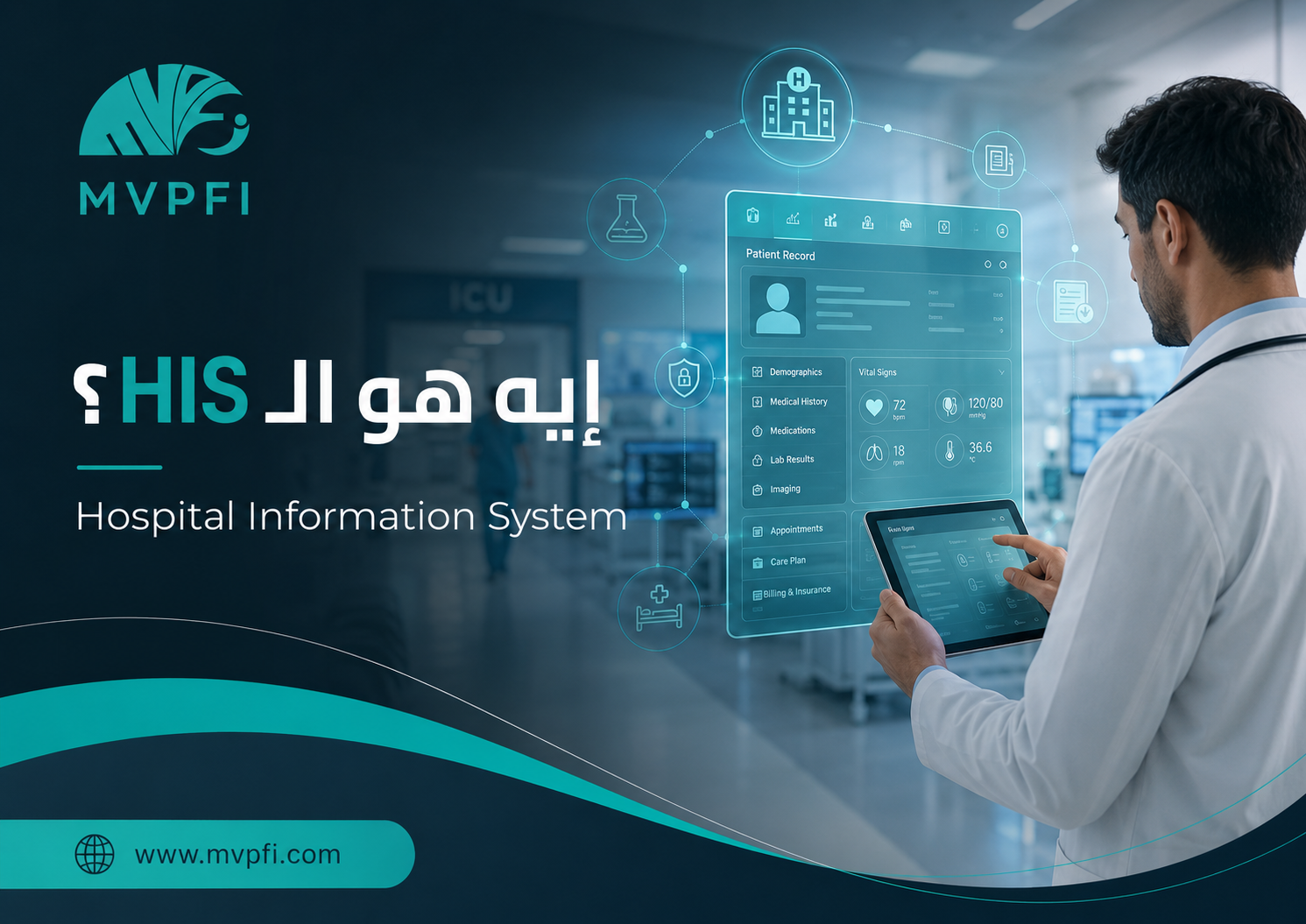
What Is HIS (Hospital Information System) and How Does It Help Hospitals and Clinics Operate Smarter?
HIS, or Hospital Information System, is an integrated digital system that helps hospitals, clinics, and medical centers manage daily operations: patients, appointments, doctors, medical records, billing, inventory, departments, reports, and workflows between medical and administrative teams.
In any hospital or medical center, the amount of data and daily operations is massive. A patient enters reception, moves to consultation, may need lab tests or radiology, receives a diagnosis, gets a prescription, then goes through billing and possibly follow-up later. If each step is handled manually or in disconnected files, problems appear quickly.
This is where HIS becomes important. The system is not only about “storing data.” It connects different parts of the healthcare facility into a clear operational cycle and allows management to see what is happening in real time instead of depending on paper, spreadsheets, or constant internal communication.
What Does HIS Mean?
HIS stands for Hospital Information System. It is a digital system that helps healthcare organizations organize and manage medical, administrative, financial, and operational data inside a hospital, clinic, or medical center.
A HIS brings together the medical side, administrative side, financial side, and operational side into one platform. In other words, it does not only serve doctors, accountants, or reception staff separately. It connects everyone inside one workflow.
A good HIS does not only change how work looks. It changes how decisions are made inside the healthcare organization.
What Is the Difference Between HIS, EMR, and EHR?
HIS, EMR, and EHR are often confused in healthcare technology. They are related, but each one has a different role.
| Term | Meaning | Main Role |
|---|---|---|
| HIS | Hospital Information System | Manages the hospital medically, administratively, financially, and operationally |
| EMR | Electronic Medical Record | Manages the patient’s electronic medical file inside one healthcare organization |
| EHR | Electronic Health Record | A broader health record that may move across multiple healthcare organizations |
Simply put, EMR and EHR focus more on the patient’s medical record, while HIS is the wider system that manages the healthcare facility as a whole and may include medical records as one of its components.
Why Do Hospitals and Clinics Need HIS?
Healthcare work is sensitive, fast, and highly dependent on accurate information. Any error in data or delay in procedures can affect patient experience, team efficiency, and management decisions. A HIS reduces randomness and makes every step traceable.
Main Components of a Hospital Information System
A real HIS is not just a screen for entering patient information. It is a group of connected modules that support the patient journey and hospital operations.
Patient Management
Records patient details, medical number, medical history, previous visits, clinical notes, and contact information.
Appointment Management
Organizes clinic bookings, doctor schedules, waiting lists, cancellations, rescheduling, and appointment reminders.
Electronic Medical Records
Stores diagnoses, prescriptions, clinical notes, lab results, radiology reports, procedures, and treatment plans.
Billing and Accounting
Issues invoices, records payments, handles discounts, insurance, contracts, and account settlements.
Medical Inventory
Tracks medicines, medical supplies, reorder levels, expiry dates, dispensing, and transfers between stores.
Reports and Dashboards
Displays KPIs such as visits, revenue, clinic occupancy, doctor performance, inventory movement, and expenses.
The Patient Journey Inside a HIS
The value of HIS becomes clearer when we follow the patient journey from arrival to completion of the visit. Every step is recorded and connected to the next one.
Registration and Reception
Patient data is registered or retrieved from an existing file, then the visit reason, department, or doctor is selected.
Consultation and Diagnosis
The doctor reviews medical history, records diagnosis, requests lab or radiology services, and adds a treatment plan or prescription.
Supporting Services
Lab, radiology, or pharmacy teams receive requests digitally and add results or confirm service completion.
Billing and Follow-Up
The invoice is generated, payment is recorded, the visit is closed, and follow-up appointments can be scheduled when needed.
How Does HIS Help Hospital Management?
Management does not only need to know the number of patients. It needs to understand performance: which clinic is under pressure, which doctor has more bookings, where delays happen, which services are most requested, what the operating cost is, and where improvement opportunities exist.
| Management Question | How HIS Helps |
|---|---|
| How many daily visits do we have? | Shows patient numbers by department, doctor, and time period |
| Which clinics are overloaded? | Shows occupancy, waiting lists, and peak hours |
| Which services are most profitable? | Connects invoices with services, departments, and costs |
| Where does patient delay happen? | Tracks waiting time between reception, consultation, services, and billing |
| Is inventory under control? | Alerts on shortages, expiry dates, and dispensing movement |
Benefits of HIS for Doctors and Medical Teams
Doctors need fast access to accurate information. Instead of searching through paper files or asking multiple departments, a doctor can view patient history, lab results, radiology reports, previous medications, allergies, and important notes in one place.
Faster Information Access
Patient data, previous visits, and medical results are available in one organized system.
More Accurate Decisions
A clear medical history helps reduce errors and improve diagnosis, treatment, and follow-up.
Better Communication
Connecting doctors with lab, radiology, pharmacy, and billing reduces phone calls and delays.
Organized Medical Documentation
Diagnoses, procedures, prescriptions, and notes are recorded clearly and can be reviewed later.
Benefits of HIS for Patients
Patients may not care about the name of the system, but they feel its impact. When the patient journey is organized, waiting time decreases, errors become less likely, follow-up improves, and the healthcare experience becomes clearer.
The best healthcare system is not one that adds complexity for patients, but one that makes them feel speed, clarity, and organization.
Paper-Based Work vs Hospital Information System
| Paper or Spreadsheet-Based Work | Work With HIS |
|---|---|
| Difficult access to patient history | Digital medical file available based on permissions |
| Repeated data entry across departments | Unified data shared between connected departments |
| Delays between reception, clinic, and billing | Clear workflow connecting every step of the patient journey |
| Manual and inaccurate reports | Real-time reports by department, period, service, and doctor |
| Difficult error and responsibility tracking | Operation logs show who did what and when |
Is HIS Only for Hospitals?
Although the name refers to hospitals, the concept of HIS and healthcare management systems applies to many types of medical organizations, with different levels of complexity and features.
Hospitals
Need integrated management for departments, inpatient care, emergency, surgery, clinics, lab, radiology, and pharmacy.
Medical Centers
Need appointment management, doctors, patient files, billing, services, and operational reports.
Specialized Clinics
May need a simpler version for appointments, medical history, prescriptions, follow-up, and invoices.
Labs and Radiology Centers
Need request management, results, reports, doctor connections, billing, and patient records.
Key Features of a Good HIS
Not every system that carries the name HIS provides the same value. A good HIS must be clear, secure, customizable, and easy to use for both medical and administrative teams.
| Feature | Why It Matters |
|---|---|
| Ease of Use | Medical teams do not have time to deal with complicated systems during busy work hours |
| Accurate Permissions | Protects patient data and prevents unauthorized access |
| Department Integration | Connects reception, clinics, lab, radiology, pharmacy, billing, and inventory |
| Strong Reports | Helps management monitor performance and make data-driven decisions |
| Customization | Every hospital or medical center has a different workflow |
| Security and Backup | Protects healthcare data and supports business continuity during incidents |
Challenges When Implementing HIS
Implementing a HIS is not only about buying software. It is an operational transformation project that requires analysis, training, data preparation, and changes in the way teams work.
Resistance to Change
Some employees prefer old methods because they are familiar, so training and gradual adoption are essential.
Weak Process Analysis
If workflows are not understood before implementation, the system may become an obstacle instead of a solution.
Unorganized Data
Migrating old, incomplete, or inaccurate data can affect system quality from the beginning.
Unclear Permissions
Patient data is sensitive and should not be available to all users at the same level.
Steps to Implement HIS Successfully
The best way to implement HIS is through clear phases, starting with current-state analysis, then system design, data preparation, training, testing, and gradual launch.
Workflow Analysis
Understand the patient journey, departments, permissions, billing, inventory, and required reports before development or setup.
System Design
Define modules, user screens, permissions, reports, and required integrations.
Data Cleaning and Preparation
Organize patient data, doctors, services, prices, inventory, and contracts before going live.
Training and Pilot Launch
Train users, test real scenarios, improve based on feedback, then launch gradually.
How Do You Know Your Healthcare Organization Needs HIS?
There are clear signs that it may be time to move to a Hospital Information System or improve your current system.
| Sign | What It Means |
|---|---|
| Repeated entry of the same data | Departments are disconnected and manual work is wasting time |
| Difficulty generating accurate reports | Management cannot see the full picture at the right time |
| Delays in the patient journey | There is weak connection between reception, clinics, services, and billing |
| Missing or incomplete patient data | Paper-based or disconnected files increase the risk of mistakes |
| Inventory or dispensing problems | There is no accurate view of medicines and medical supplies movement |
| Difficulty tracking doctors and departments | You need better operational dashboards and reports |
Common Mistakes When Choosing a HIS
Choosing Only the Cheapest System
Price matters, but a weak system may cost more later through downtime, poor usability, and heavy customization.
Ignoring User Training
Even the best system can fail if the team does not understand how and why to use it.
Not Customizing to Real Workflow
Hospitals and medical centers differ in procedures, so the system must match the actual workflow.
Neglecting Security and Backup
Patient data is sensitive and must be protected through permissions, encryption, backups, and audit logs.
Conclusion
HIS, or Hospital Information System, is the digital backbone that helps hospitals, clinics, and medical centers organize operations and connect data, teams, departments, and decisions in one system.
A good HIS reduces paper work, speeds up the patient journey, improves data accuracy, supports doctors, organizes billing and inventory, and gives management clearer visibility into performance.
Implementing HIS should not be treated as simply buying software. It is a digital transformation project that starts with workflow analysis, permission design, data organization, team training, and gradual system adoption.
Turn Hospital or Medical Center Operations Into a Clear, Measurable Digital System
MVPFI helps healthcare organizations analyze medical workflows, design and develop HIS, EMR, and dashboards, connect departments, organize permissions, build management reports, and transform medical and administrative operations into an integrated digital system.
Frequently Asked Questions
What is HIS?
HIS stands for Hospital Information System. It is a system that helps manage patients, appointments, medical records, billing, inventory, departments, reports, and hospital workflows.
What is the difference between HIS and EMR?
EMR focuses on the patient’s electronic medical record, while HIS is broader and manages the hospital or medical center medically, administratively, financially, and operationally.
Is HIS suitable for small clinics?
Yes, but usually in a simpler version that fits clinic size, such as appointment management, patient files, prescriptions, billing, and follow-up.
What are the main benefits of HIS?
HIS organizes the patient journey, reduces errors, speeds up procedures, improves reports, manages inventory, protects data, and connects departments in one system.
Is HIS implementation difficult?
It can be difficult if done without analysis and training, but it becomes more successful when implemented gradually with clear workflow understanding and proper user training.
Does HIS improve patient experience?
Yes. It reduces waiting time, repeated data entry, and errors, while helping medical and administrative teams deliver faster and more organized service.
What is the most important factor when choosing a HIS?
The system should fit the organization’s workflow, be easy to use, secure, customizable, and support reports, permissions, and department integration.
How can MVPFI help build a HIS?
MVPFI helps analyze healthcare organization needs, design the system, develop customized modules, build dashboards, organize permissions, and connect departments and data in one digital platform.

Add New Comment